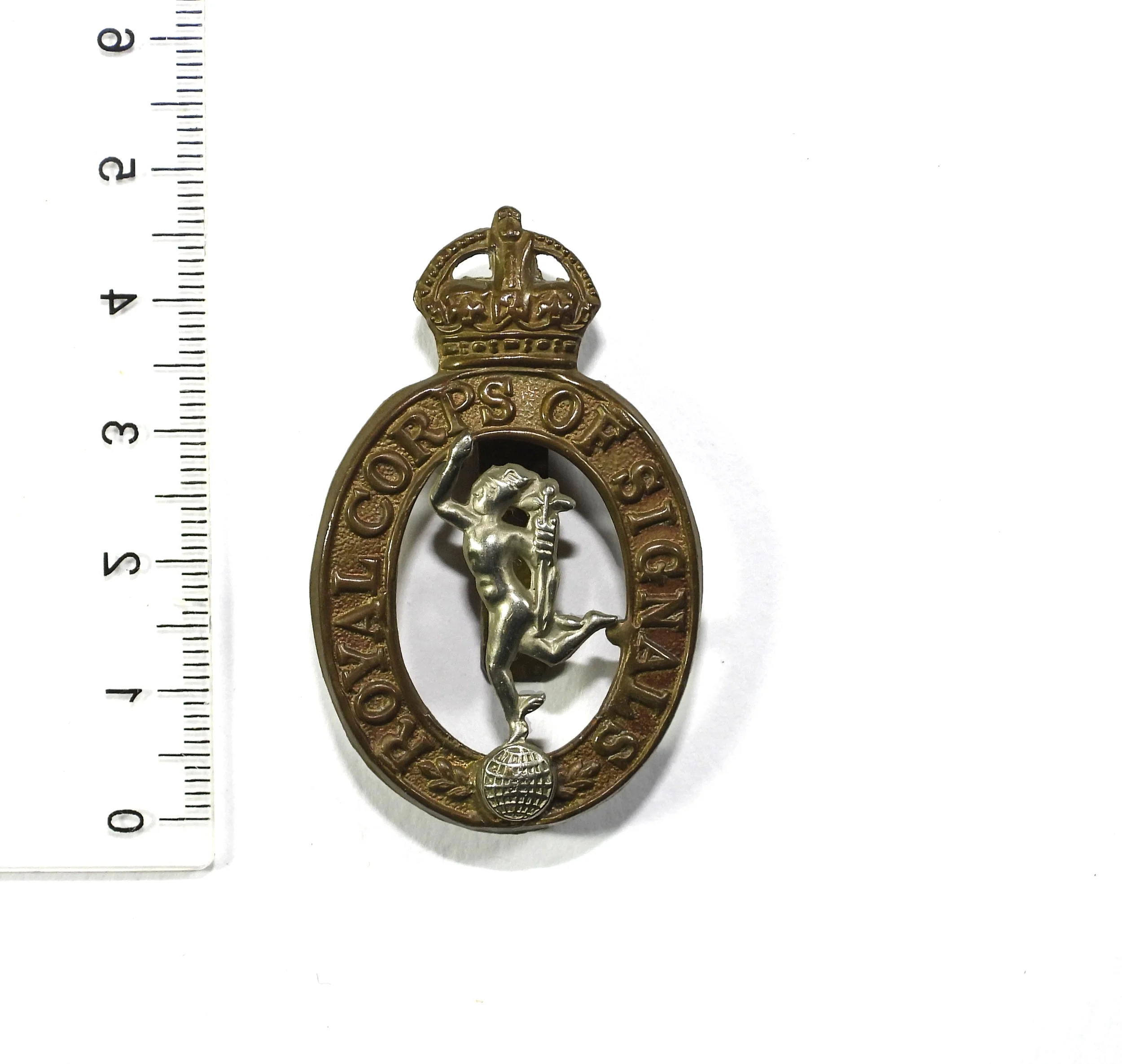
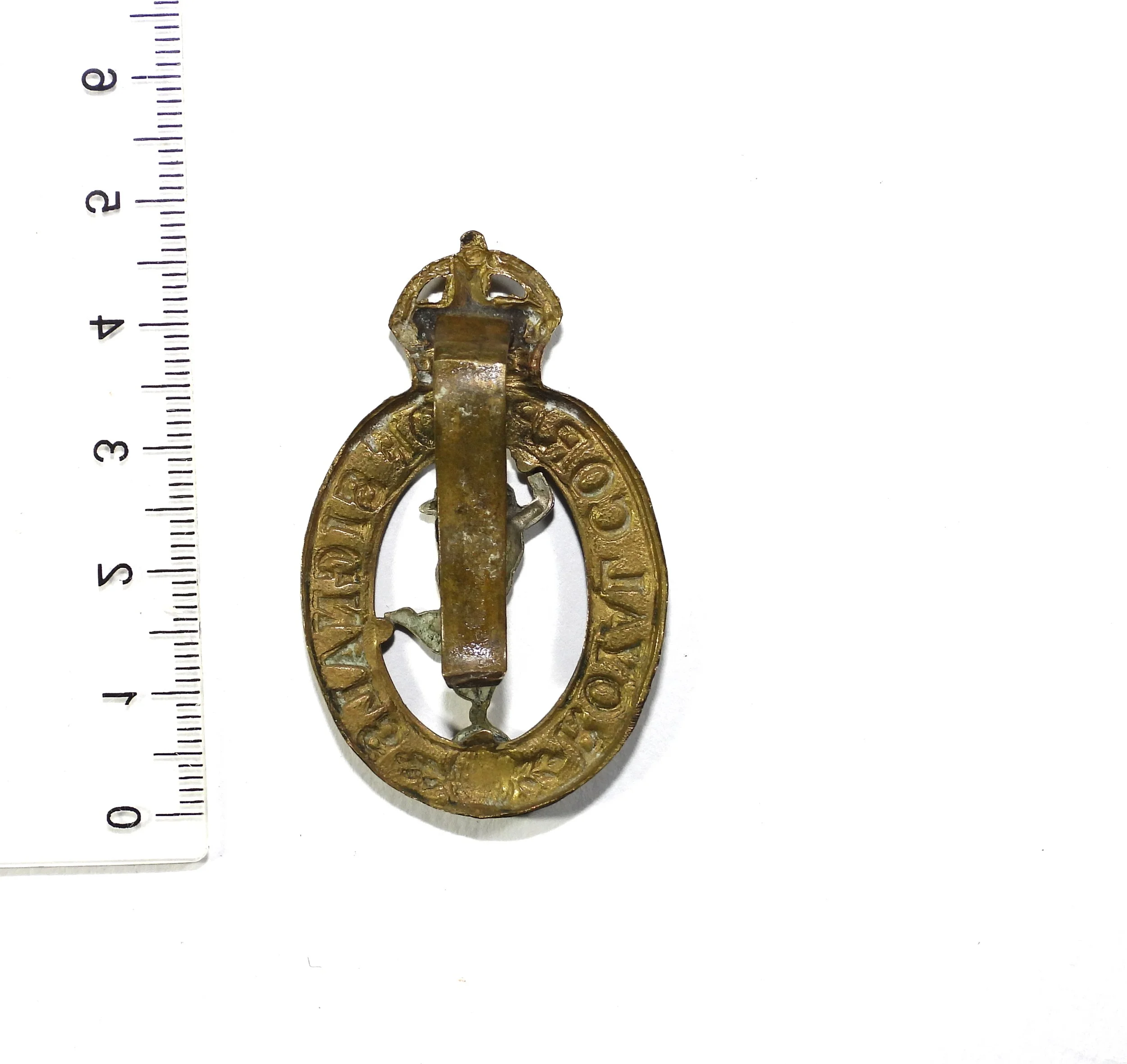
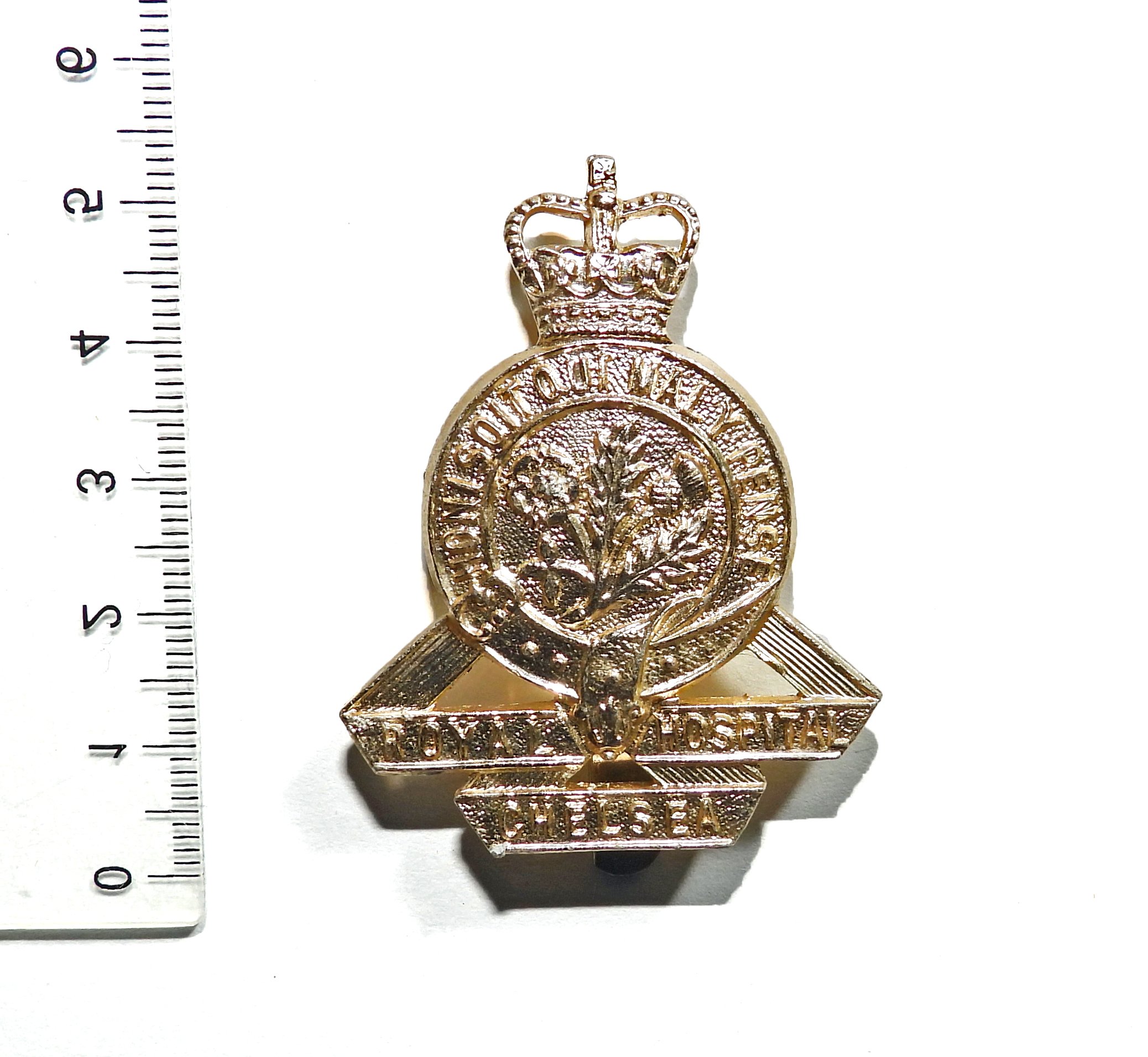
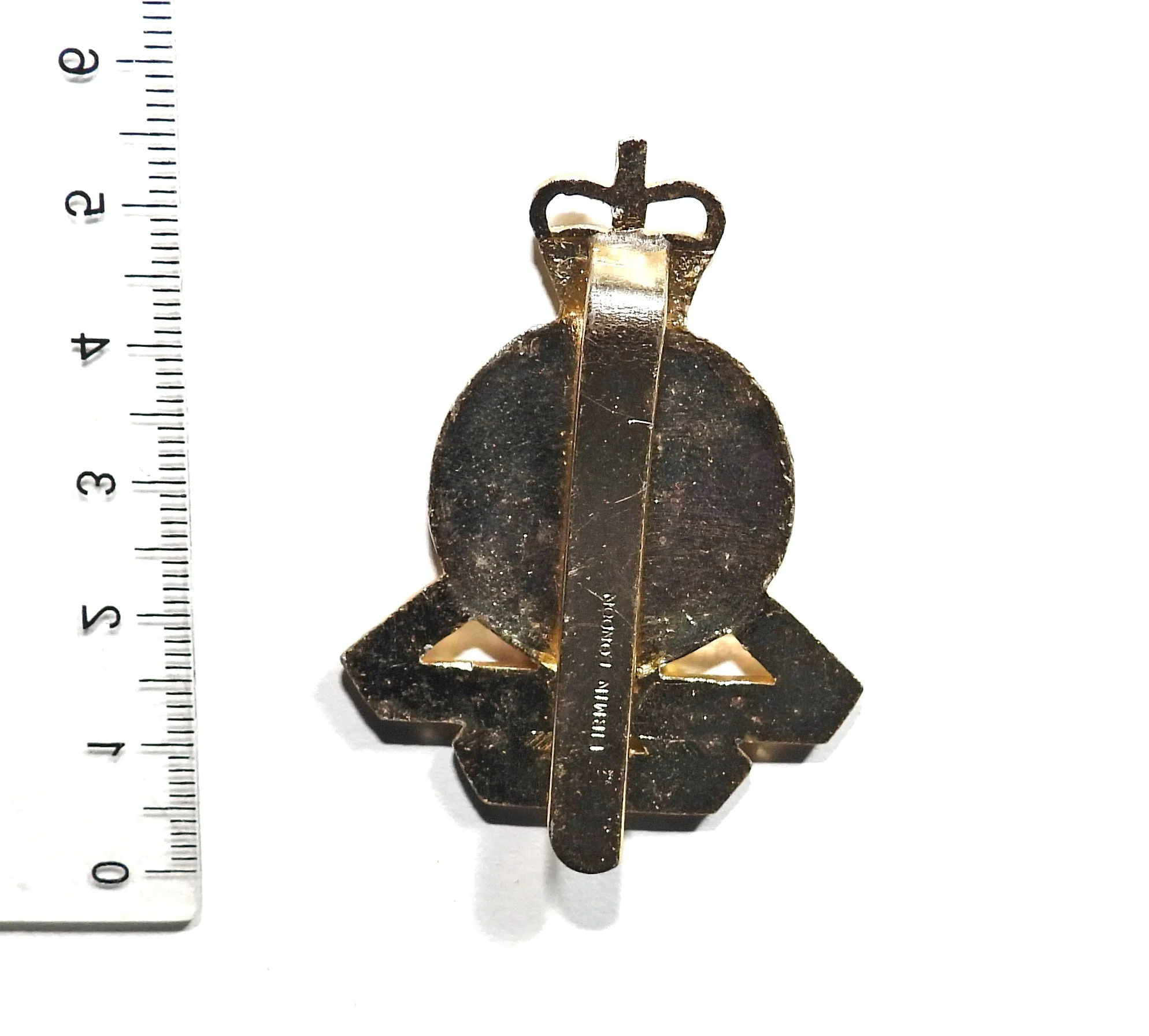
Queen Mary's Army Auxiliary Corps Cap Badge. United Kingdom.
$35.00
A voided brass Tudor (King's) crown cap badge for Queen Mary's Army Auxiliary Corps (Q.M.A.A.C.). United Kingdom. 1918 to 1921.
Good condition. Complete with slider. Ref: J56.
The Women's Army Auxiliary Corps (WAAC) was formed in 1917 to free up soldiers from non-combat roles so that they could go and fight. Women were employed as cooks, mess waitresses, clerks, telephone operators, store-women, drivers, printers, bakers and cemetery gardeners. By 1918, nearly 40,000 women had enrolled. Of these, some 7,000 served in France on the Western Front, the rest in the UK.
In honour of their conduct, Queen Mary became the unit's patron. On 9 April 1918 the WAAC was officially renamed Queen Mary's Army Auxiliary Corps (QMAAC). The QMAAC was disbanded on 27 September 1921.
Instead of standard military ranks, a specific grading system was authorised by Army Council Instruction No. 1069, 1917. All insignia was worn on epaulettes except that for forewoman and assistant forewoman, which was worn on the right upper arm.
A voided brass Tudor (King's) crown cap badge for Queen Mary's Army Auxiliary Corps (Q.M.A.A.C.). United Kingdom. 1918 to 1921.
Good condition. Complete with slider. Ref: J56.
The Women's Army Auxiliary Corps (WAAC) was formed in 1917 to free up soldiers from non-combat roles so that they could go and fight. Women were employed as cooks, mess waitresses, clerks, telephone operators, store-women, drivers, printers, bakers and cemetery gardeners. By 1918, nearly 40,000 women had enrolled. Of these, some 7,000 served in France on the Western Front, the rest in the UK.
In honour of their conduct, Queen Mary became the unit's patron. On 9 April 1918 the WAAC was officially renamed Queen Mary's Army Auxiliary Corps (QMAAC). The QMAAC was disbanded on 27 September 1921.
Instead of standard military ranks, a specific grading system was authorised by Army Council Instruction No. 1069, 1917. All insignia was worn on epaulettes except that for forewoman and assistant forewoman, which was worn on the right upper arm.
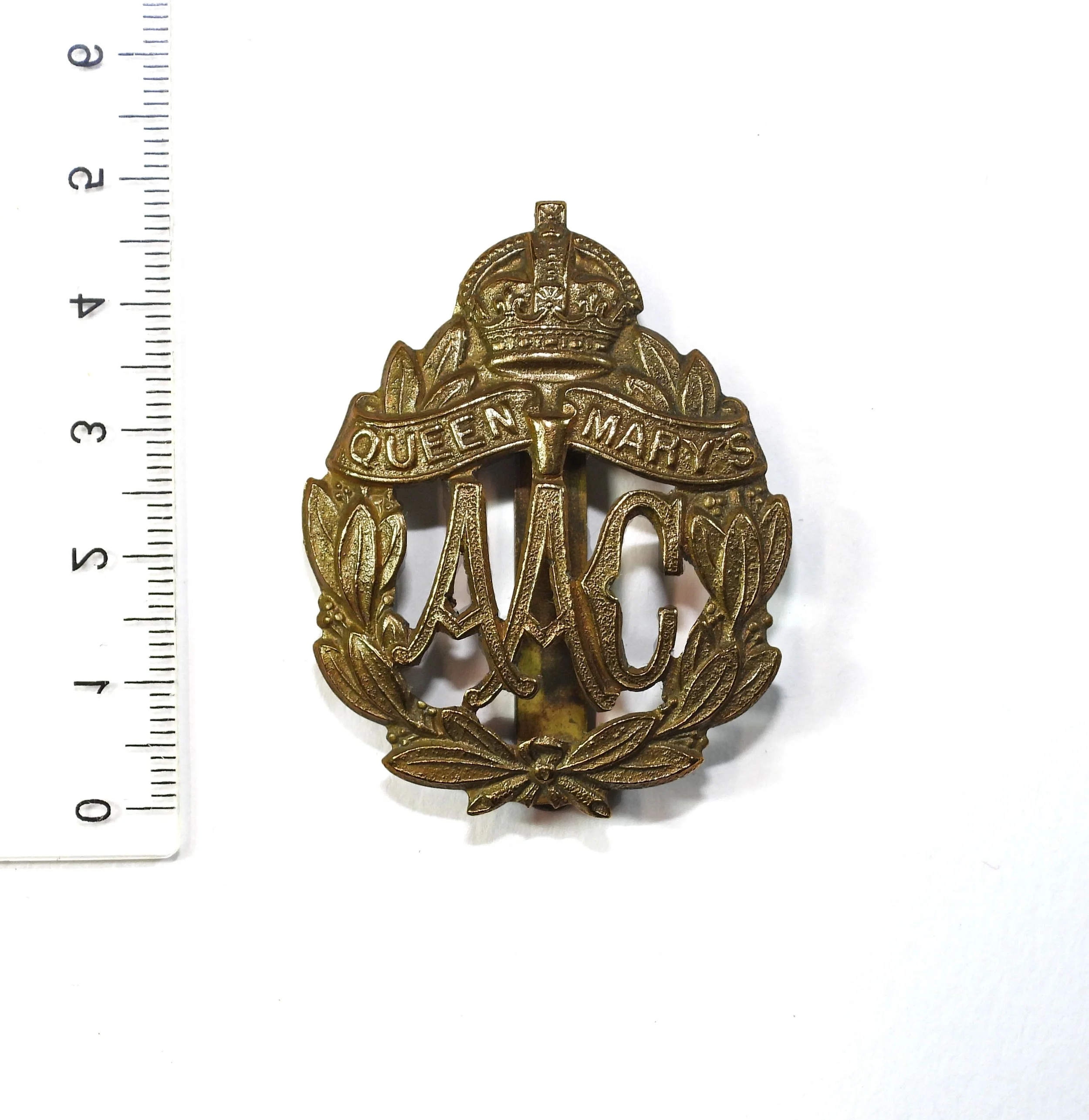 Image 1 of 2
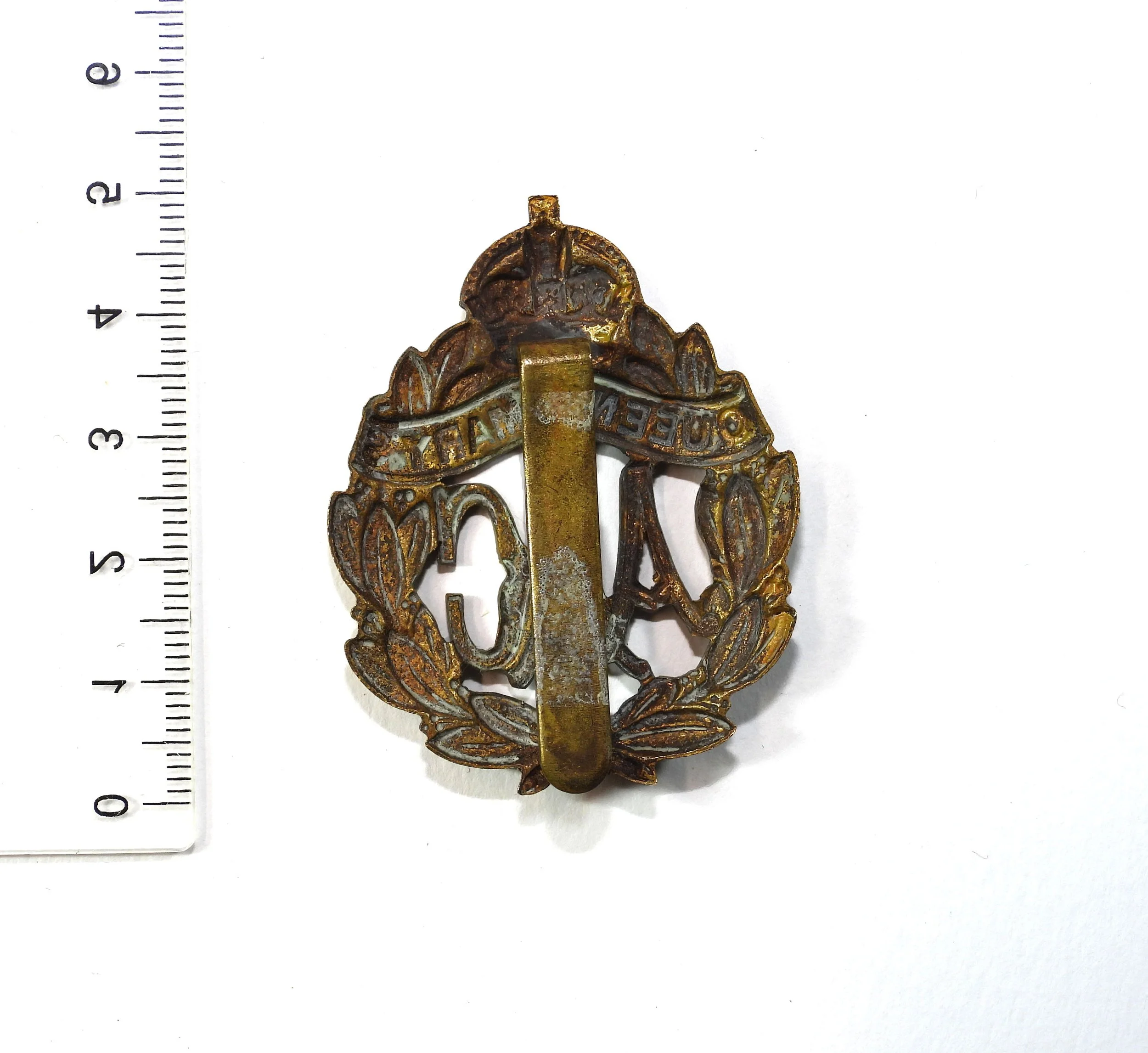 Image 2 of 2