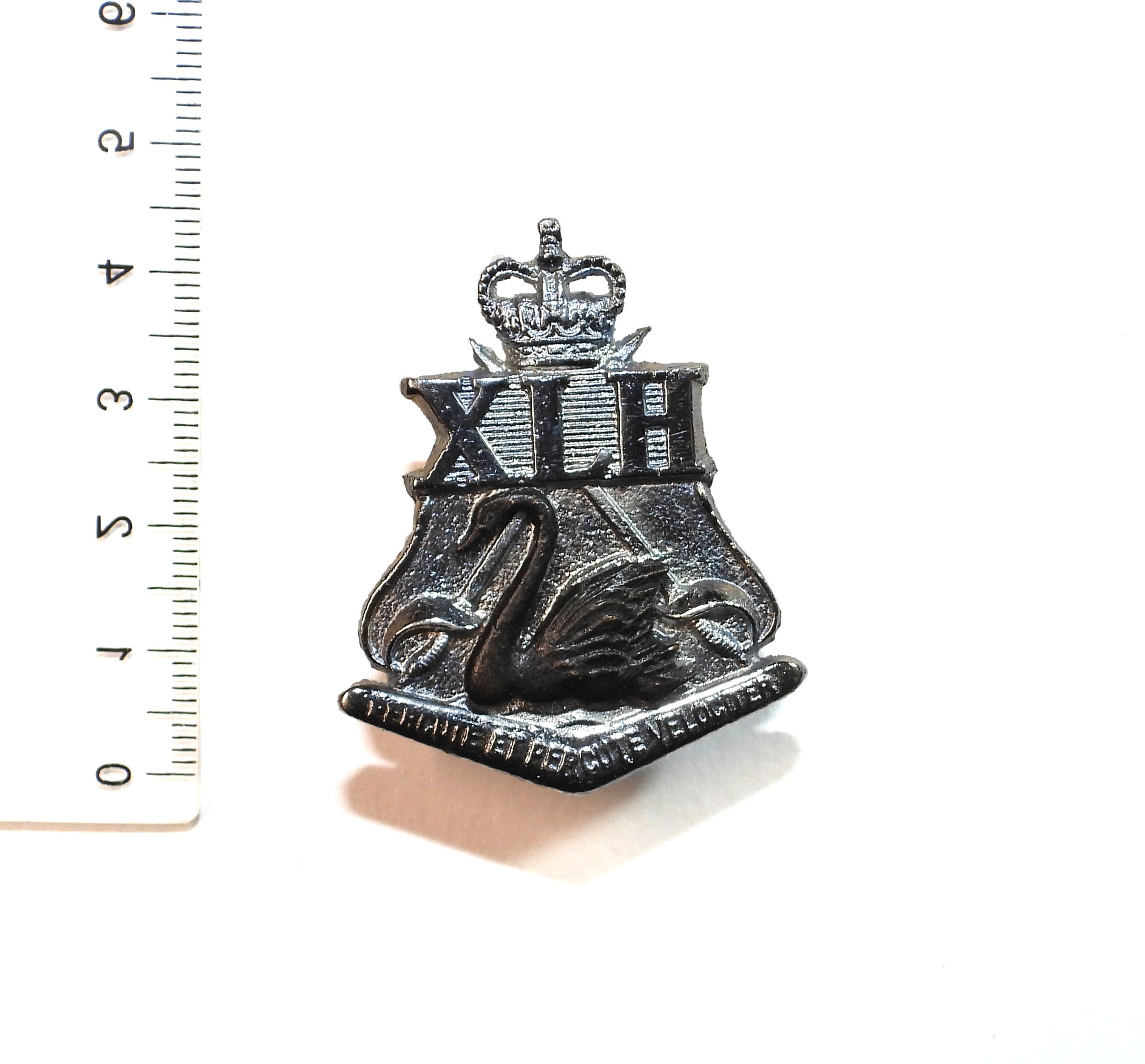
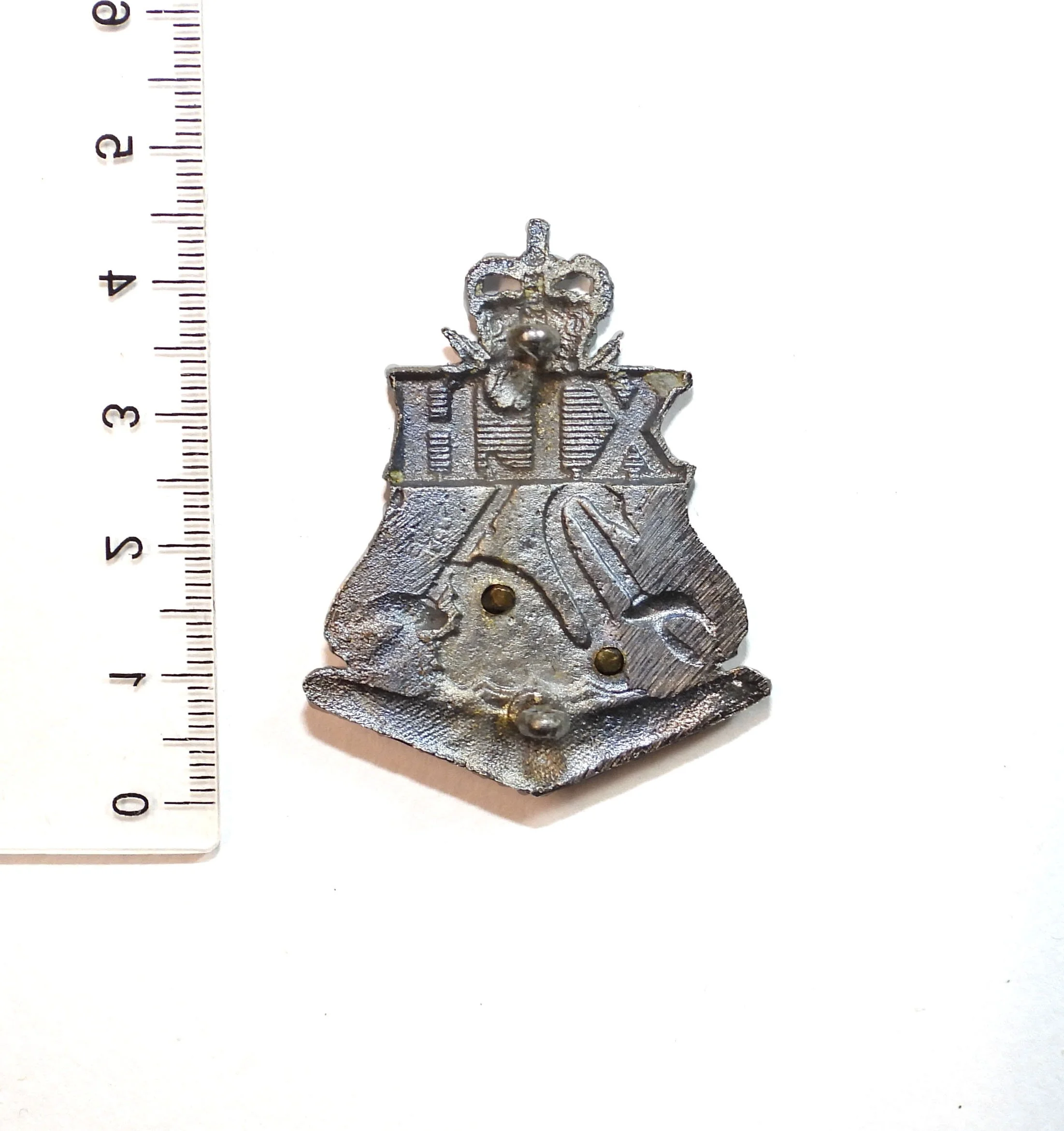
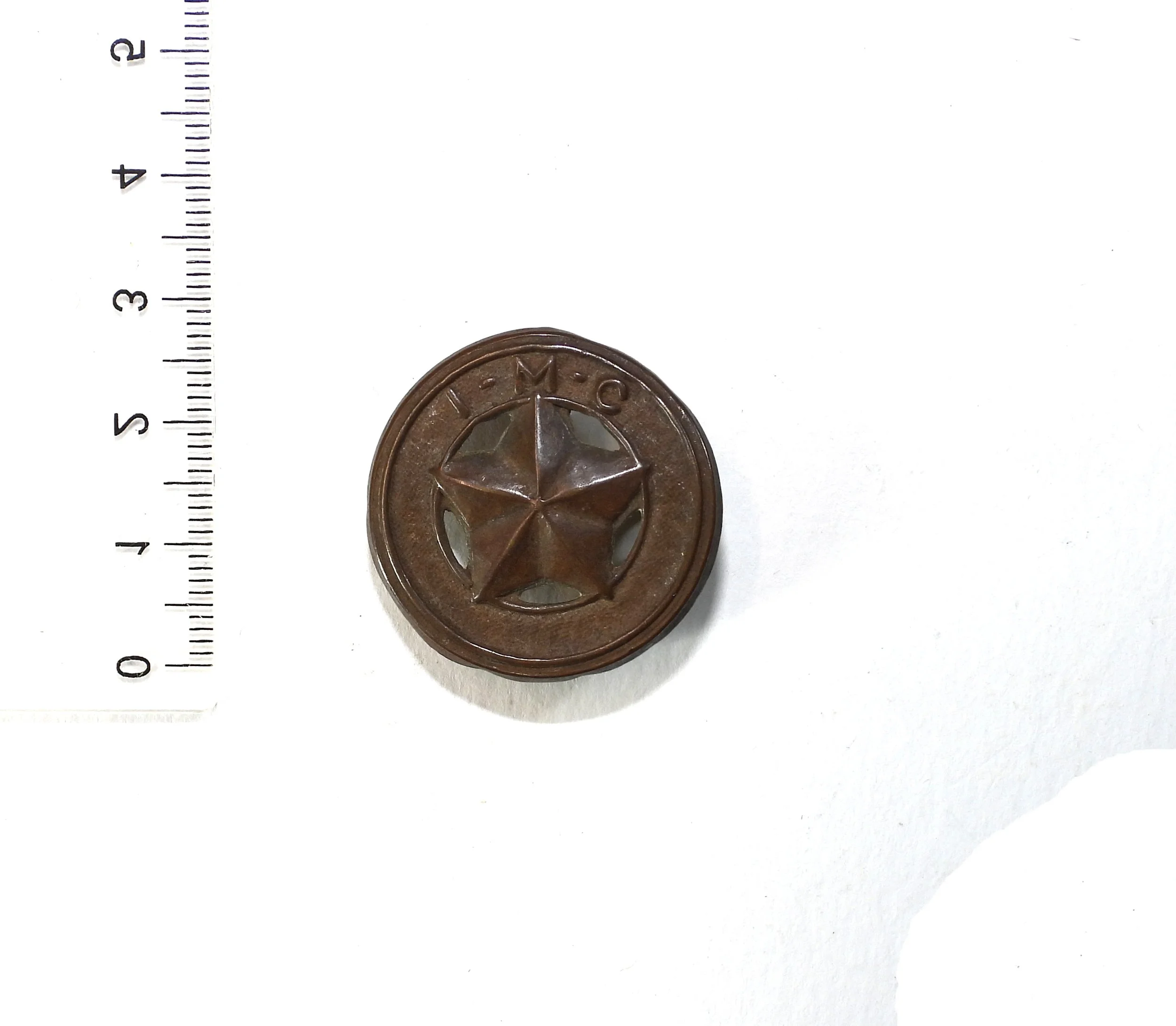
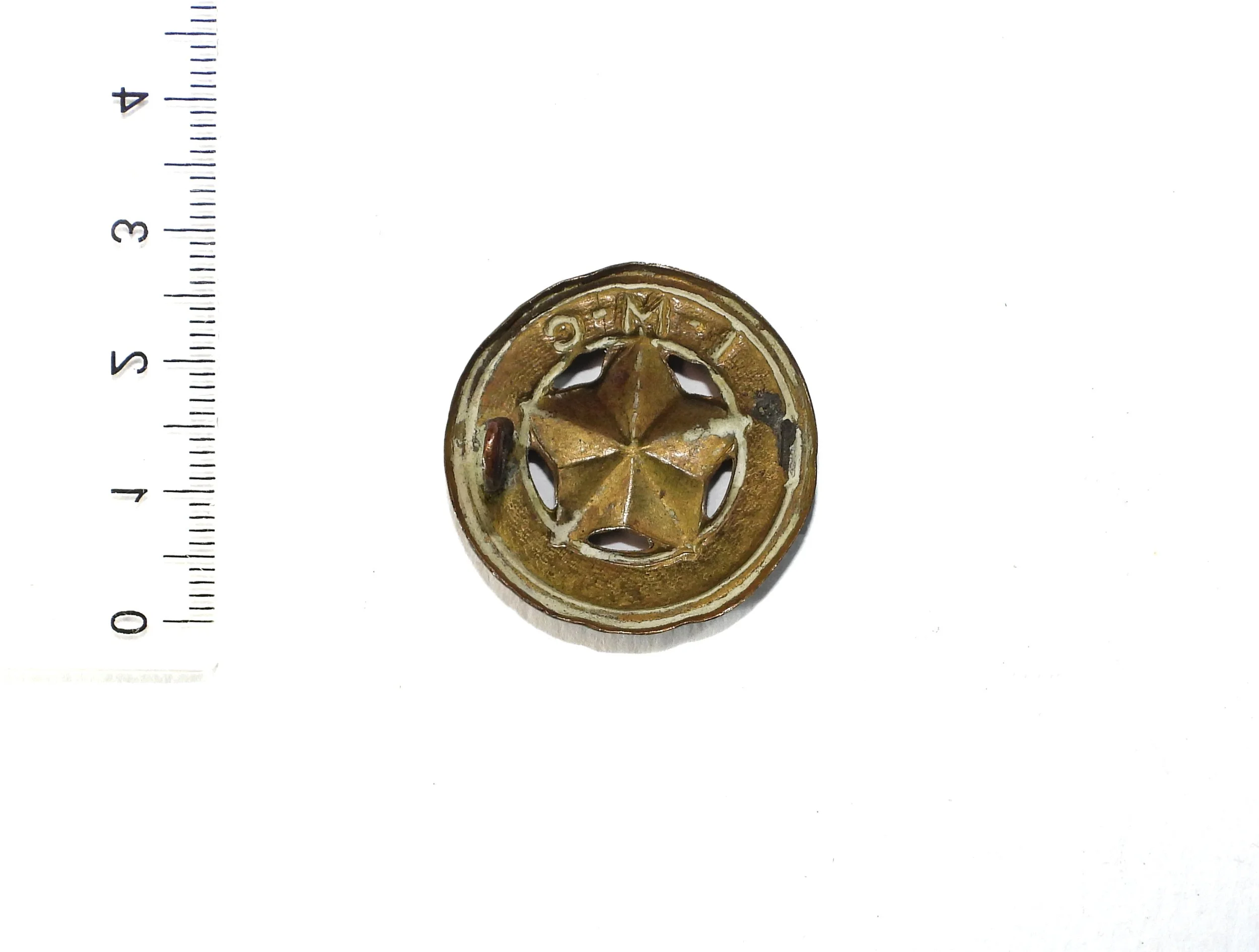
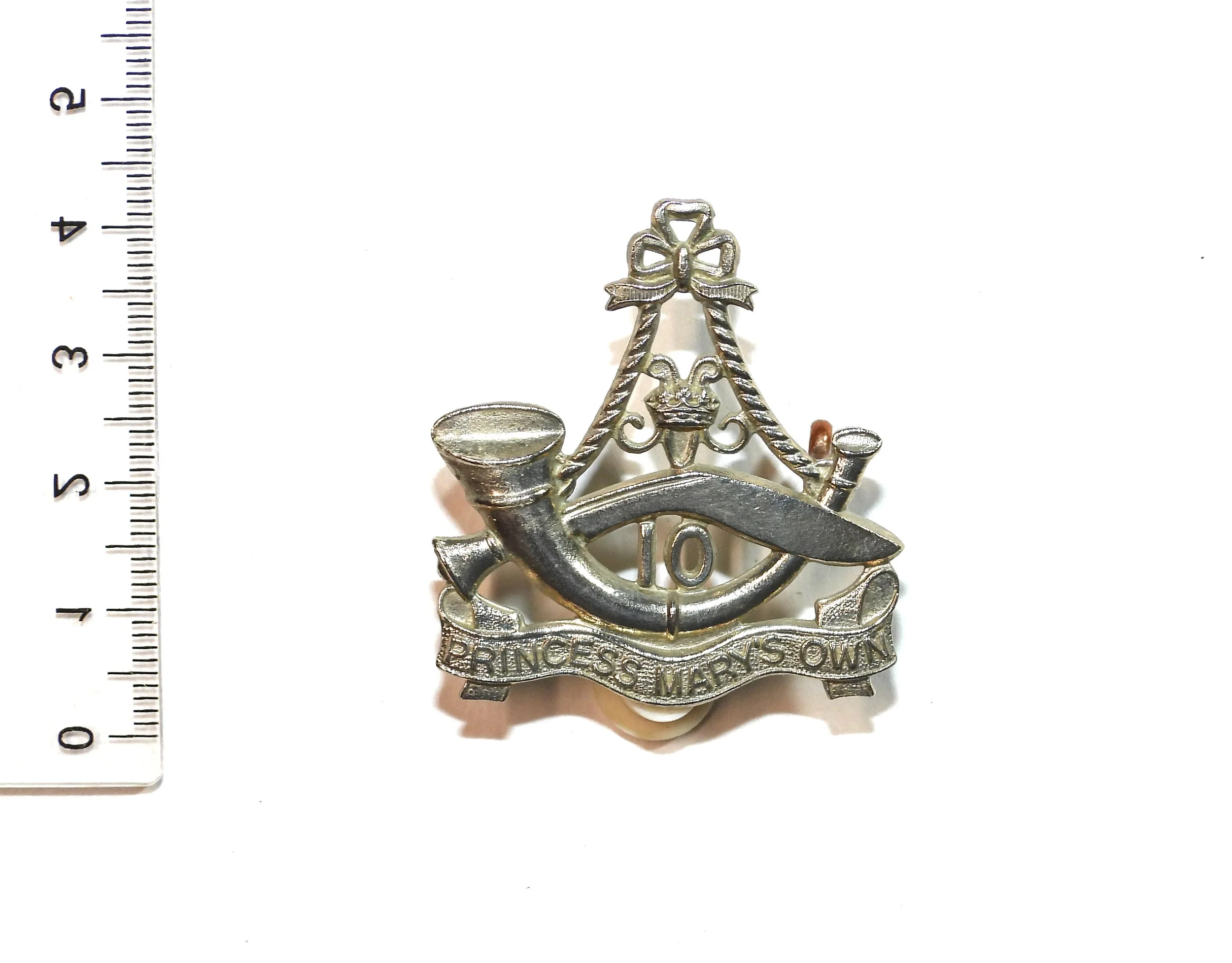
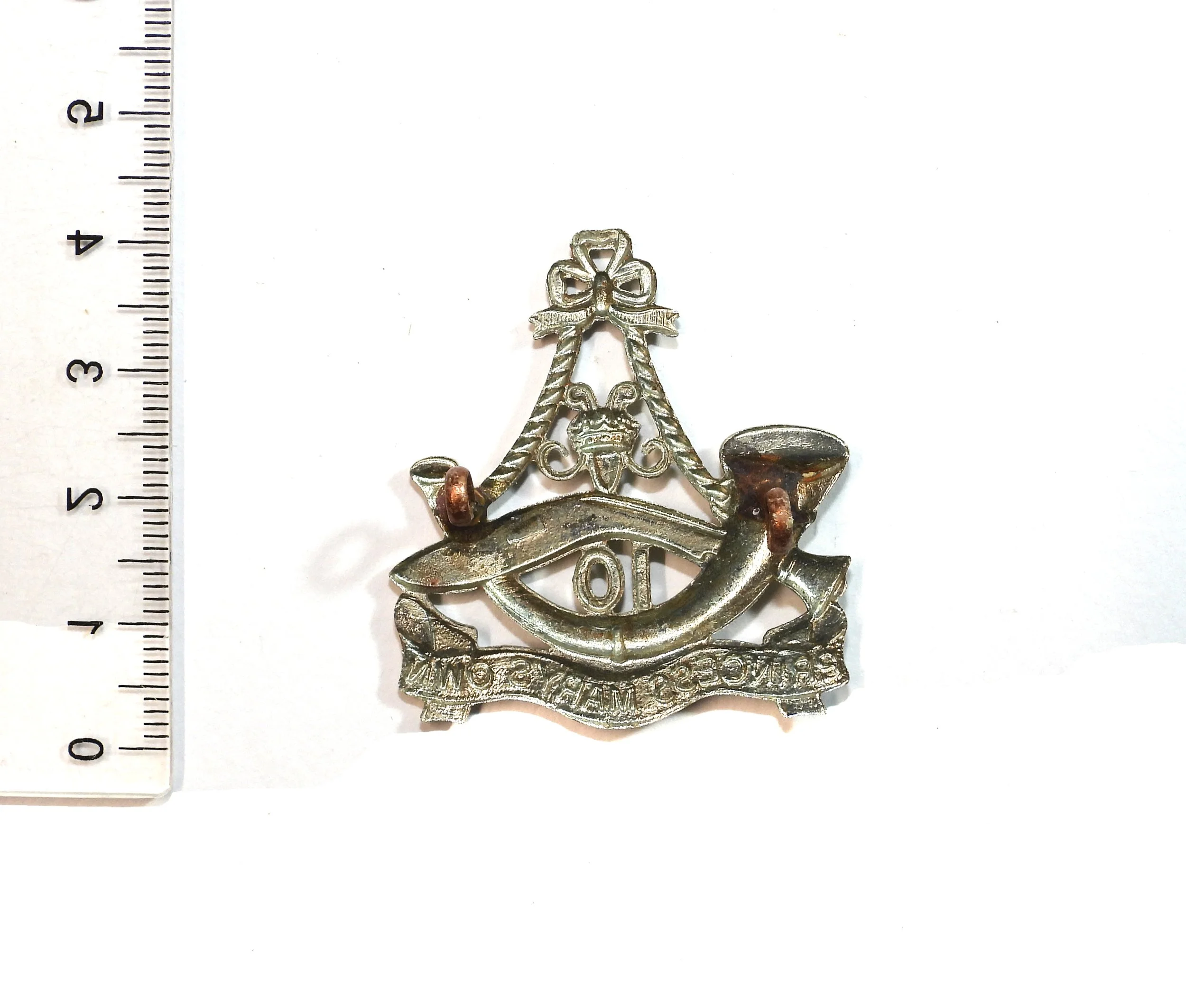
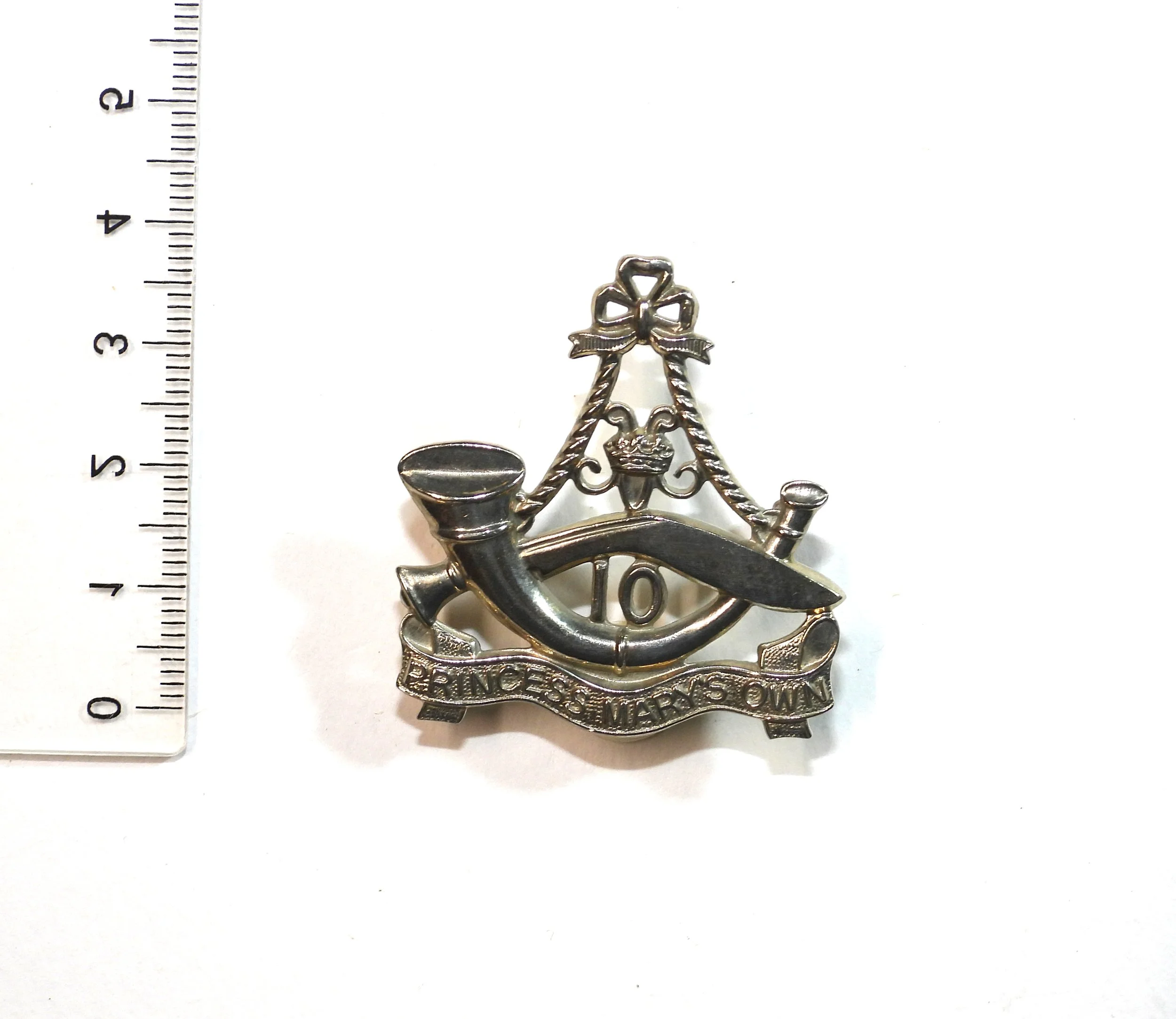
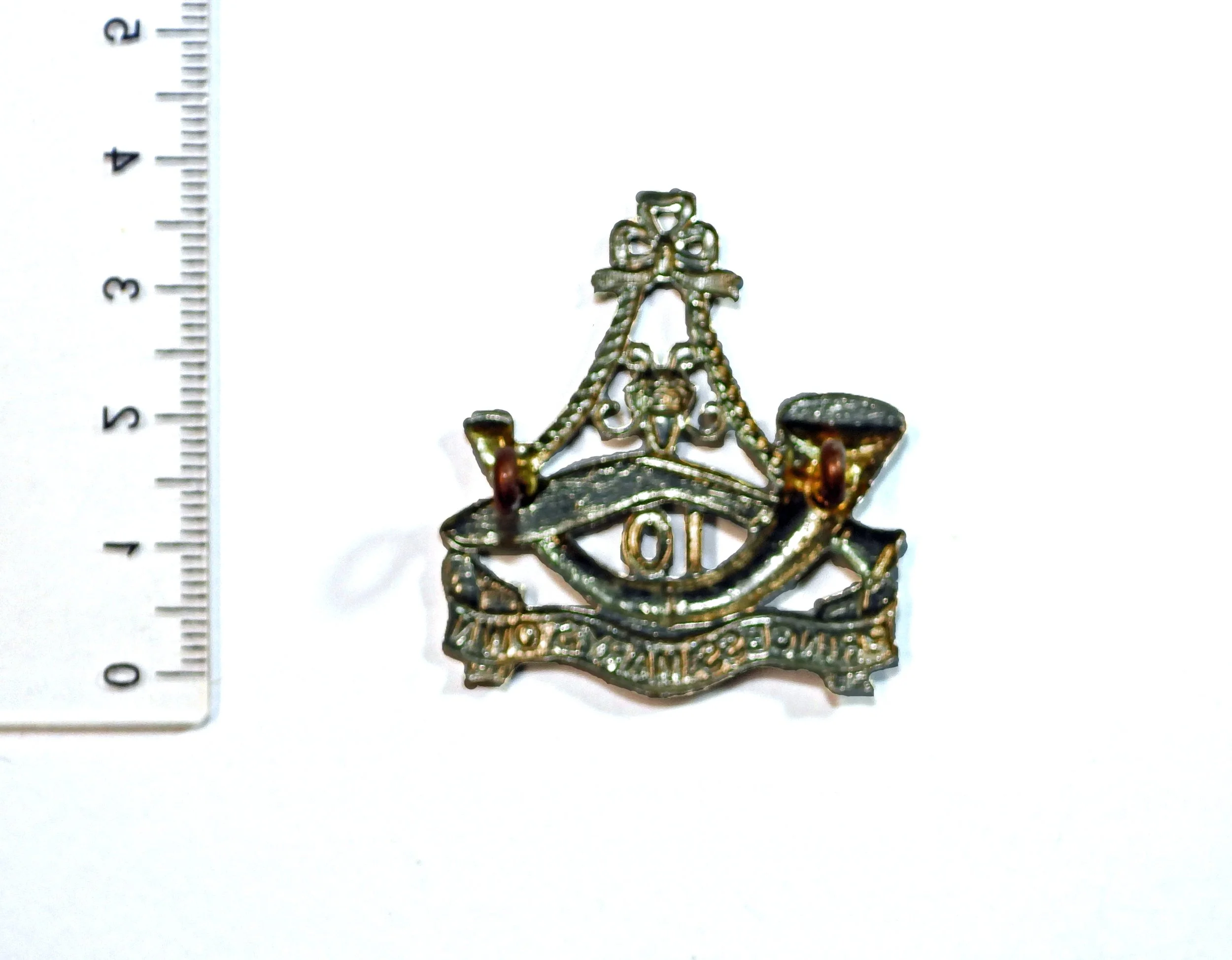
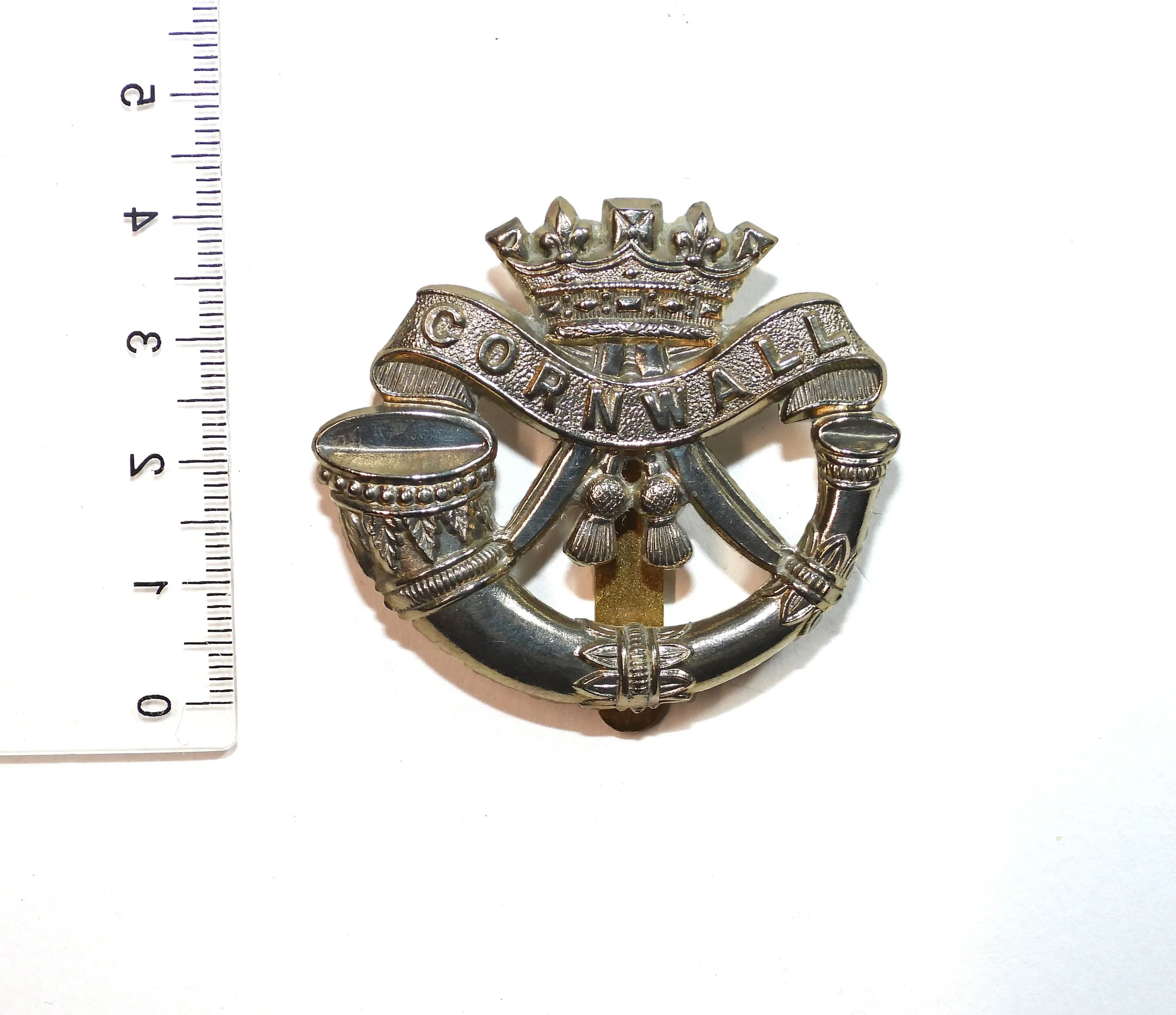
Somerset Light Infantry (Prince Albert's) 3rd & 4th Battalions brass Cap Badge. United Kingdom.
$16.00
A brass cap badge for Somerset Light Infantry (Prince Albert's) 3rd and 4th Battalions. British Army, United Kingdom. 1908 to 1916 with South Africa 1900 - 01 scroll. Priced as possible restrike in brass. 1881 - 1912: Prince Albert's (Somersetshire) Light Infantry. 1912-1920: Prince Albert's (Somerset Light Infantry).
Good condition and complete with slider. Ref: J184.
June 1685: Earl of Huntingdon's Regiment of Foot. About 1688: Hastings's Regiment of Foot. 1697: Jacob's Regiment of Foot. 1702: Earl of Barrymore's Regiment of Foot. 1715: Cotton's Regiment of Foot. 1725: Kerr's Regiment of Foot. 1732: Middleton's Regiment of Foot. 1739: Pulteney's Regiment of Foot. 1751: 13th Regiment of Foot, redesignated 13th Foot. In 1782, the 13th became one of two units associated with Somerset. The regiment duly became the 13th (1st Somersetshire) Regiment of Foot. In 1822, the 13th Foot was retitled as the 13th (1st Somersetshire) Regiment (Light Infantry).
In recognition of the regiment's service in the three-month defence of Jalalabad (1841-42) during the First Afghan War (1839-42), Queen Victoria renamed the regiment after her husband, Prince Albert. On 26 August 1842, the regiment thus became the 13th (1st Somersetshire) (Prince Albert's Light Infantry) Regiment of Foot. The regiment became the Prince Albert's Light Infantry (Somersetshire Regiment) on 1 July 1881, soon after retitled to Prince Albert's (Somersetshire Light Infantry). 1912: Prince Albert's (Somerset Light Infantry). On 1 January 1921, the regimental title was changed a final time, becoming The Somerset Light Infantry (Prince Albert's).
In 1959, it was merged with The Duke of Cornwall’s Light Infantry to form The Somerset and Cornwall Light Infantry.
In 1898, when khaki service dress was introduced, a metal badge was designed for the new slouch hat. This consisted of a bugle surmounted by a mural crown above which was a scroll inscribed "Jellalabad". The cypher "PA" for Prince Albert was placed within the strings of the bugle horn. This remained the regiment's cap badge on various forms of head-dress until amalgamation.
A brass cap badge for Somerset Light Infantry (Prince Albert's) 3rd and 4th Battalions. British Army, United Kingdom. 1908 to 1916 with South Africa 1900 - 01 scroll. Priced as possible restrike in brass. 1881 - 1912: Prince Albert's (Somersetshire) Light Infantry. 1912-1920: Prince Albert's (Somerset Light Infantry).
Good condition and complete with slider. Ref: J184.
June 1685: Earl of Huntingdon's Regiment of Foot. About 1688: Hastings's Regiment of Foot. 1697: Jacob's Regiment of Foot. 1702: Earl of Barrymore's Regiment of Foot. 1715: Cotton's Regiment of Foot. 1725: Kerr's Regiment of Foot. 1732: Middleton's Regiment of Foot. 1739: Pulteney's Regiment of Foot. 1751: 13th Regiment of Foot, redesignated 13th Foot. In 1782, the 13th became one of two units associated with Somerset. The regiment duly became the 13th (1st Somersetshire) Regiment of Foot. In 1822, the 13th Foot was retitled as the 13th (1st Somersetshire) Regiment (Light Infantry).
In recognition of the regiment's service in the three-month defence of Jalalabad (1841-42) during the First Afghan War (1839-42), Queen Victoria renamed the regiment after her husband, Prince Albert. On 26 August 1842, the regiment thus became the 13th (1st Somersetshire) (Prince Albert's Light Infantry) Regiment of Foot. The regiment became the Prince Albert's Light Infantry (Somersetshire Regiment) on 1 July 1881, soon after retitled to Prince Albert's (Somersetshire Light Infantry). 1912: Prince Albert's (Somerset Light Infantry). On 1 January 1921, the regimental title was changed a final time, becoming The Somerset Light Infantry (Prince Albert's).
In 1959, it was merged with The Duke of Cornwall’s Light Infantry to form The Somerset and Cornwall Light Infantry.
In 1898, when khaki service dress was introduced, a metal badge was designed for the new slouch hat. This consisted of a bugle surmounted by a mural crown above which was a scroll inscribed "Jellalabad". The cypher "PA" for Prince Albert was placed within the strings of the bugle horn. This remained the regiment's cap badge on various forms of head-dress until amalgamation.
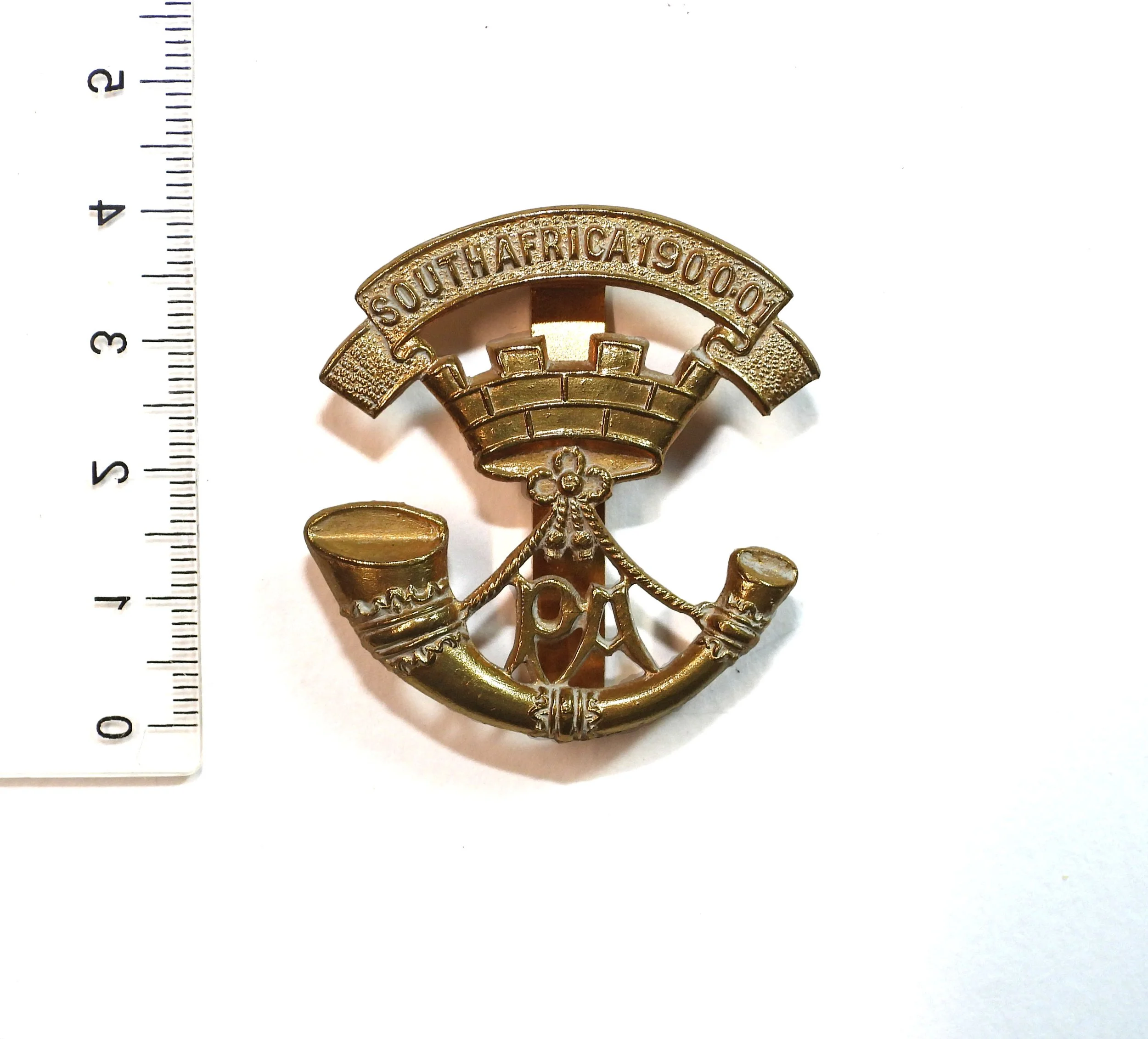 Image 1 of 2
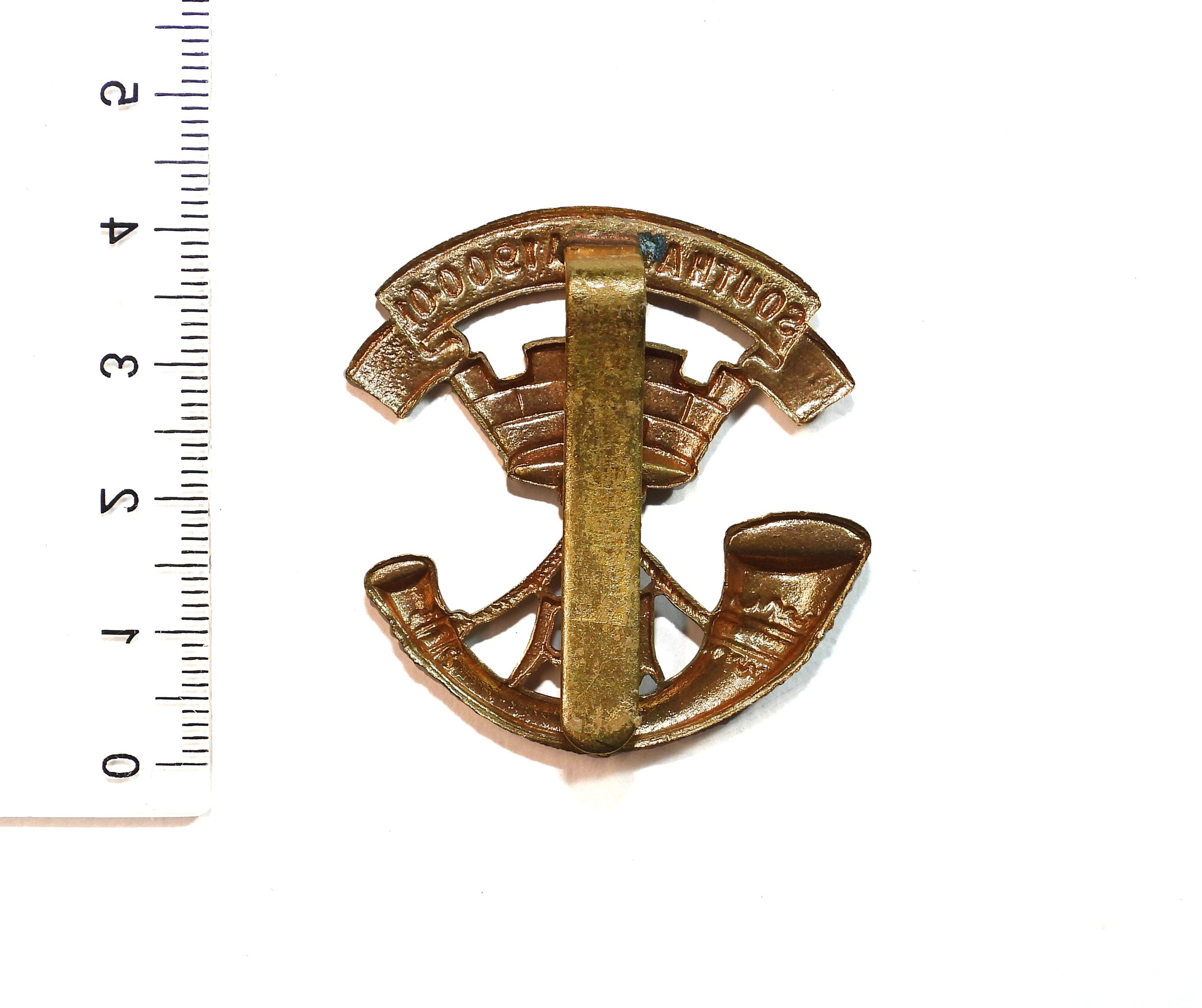 Image 2 of 2